
For years, concrete was the hidden backbone of construction, structural, necessary, and covered up as quickly as possible. Today, the script has flipped. In modern architectural design, concrete has moved from the subfloor to the spotlight, anchoring aesthetics ranging from industrial chic to warm minimalism.
But there is a disconnect in our industry. While the visual demand for exposed concrete finishes has skyrocketed, contributing to a projected $18.4 billion industrial flooring market by 2030, the structural specifications often fail to catch up until it’s too late.
We see it constantly in North Carolina. A stunning visual concept for a brewery in Asheville or a tech office in Raleigh falls apart because the slab wasn’t engineered to support the finish. True architectural integration is about bridging the gap between design vision and engineering reality.
At Permaco, we know how to treat concrete coatings not as an afterthought, but as a core architectural element.
The Importance of Designing Coatings
When we discuss integrating coatings into a design, we aren’t just talking about paint. We are talking about the “skin” of the building. This skin needs to articulate the design language of the space while protecting the substrate beneath it.
If you are aiming for the raw, utilitarian vibe of a converted warehouse or the sleek, seamless continuity of a modern home, the coating system dictates the light reflectivity, acoustic properties, and textural feedback of the room.
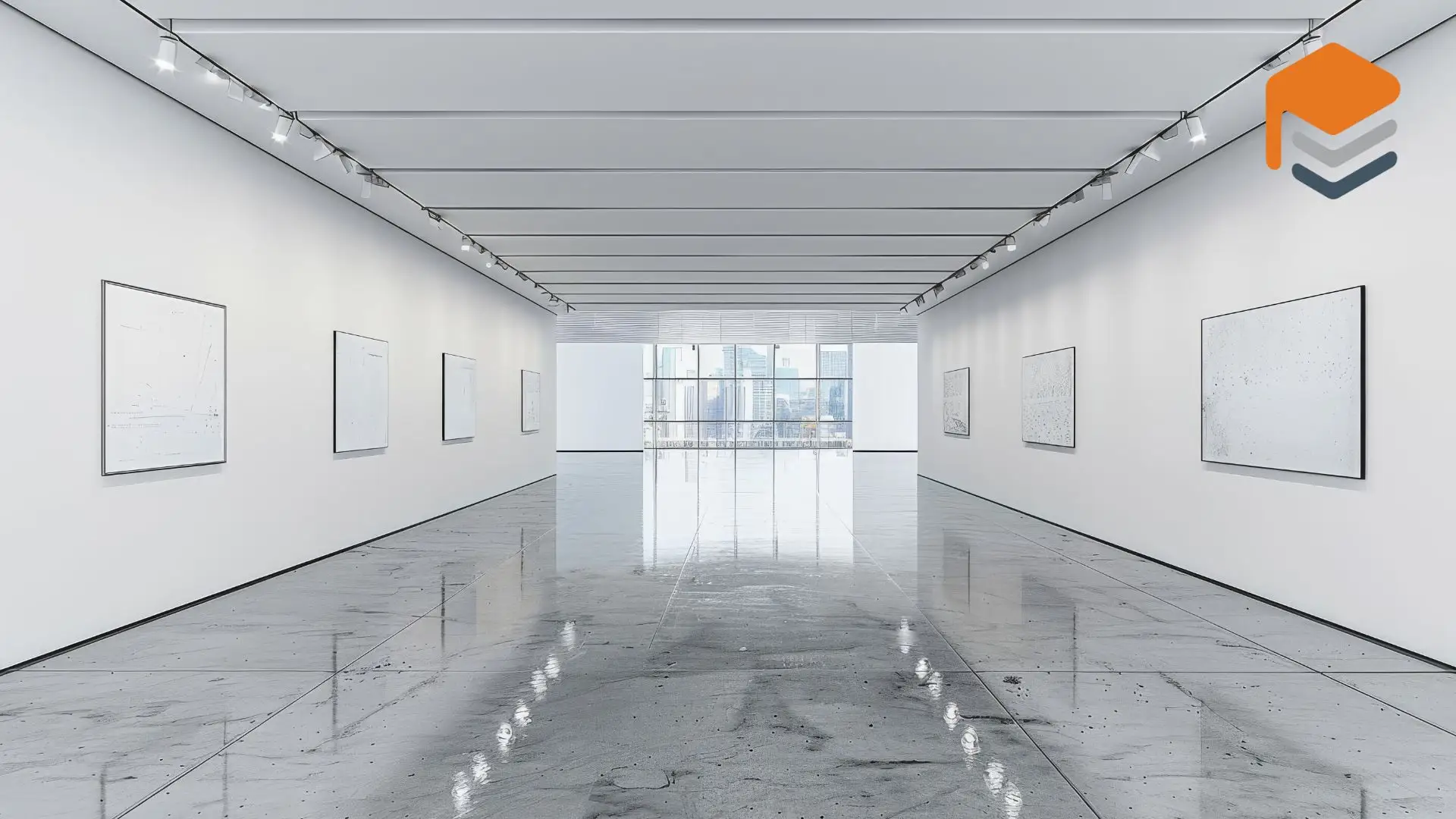
However, achieving a specific aesthetic requires understanding the material’s limitations. A minimalist design often demands a monolithic surface. No grout lines, no breaks.
This creates a visual expanse that makes spaces feel larger. But to achieve that without the surface cracking or delaminating requires selecting the right texture finish styles that can handle the specific traffic patterns and environmental stresses of the space.
Understanding ACI Standards and Slab Thickness
The most common failure point we encounter isn’t bad paint, it’s bad planning. You cannot apply a high-performance industrial coating to a slab designed only for carpet.
According to ACI 360R-10 (Guide to Design of Slabs-on-Ground), the interaction between the slab thickness and the coating is critical.
- Residential/Light Commercial: A 4-inch slab is generally considered the absolute minimum for standard performance.
- Industrial/Heavy Load: For facilities requiring true durability, like a manufacturing plant or a high-traffic showroom, a depth of 5 to 6 inches is often required to minimize deflection.
Why does this matter for the coating? If a slab is too thin for the loads it carries, it flexes. Concrete coatings are rigid or semi-rigid, and they generally do not stretch. If the canvas (the slab) moves, the painting (the coating) cracks.
When specifying industrial concrete flooring or similar high-grade systems, we look for specifications that align with these ACI standards. If the engineering data doesn’t support the load, even the most expensive polyaspartic system will eventually fail.
The “Rubbed” vs. “Coated” Debate
There is significant confusion in the architectural community regarding the difference between a “rubbed finish” and a “coating system.”
- Rubbed Finish: This is often a remedial process. It involves applying a paste to fill voids and honeycomb in the concrete surface. While it makes the concrete look uniform initially, it offers zero protection against chemicals, oil, or water intrusion. It is purely cosmetic and temporary.
- Coated System: This is a designed layer (epoxy, polyaspartic, urethane) that bonds chemically and mechanically to the slab. It provides the aesthetic uniformity of a rubbed finish but adds abrasion resistance, chemical protection, and light reflectivity.
If your client wants the “polished look” but the slab quality is poor, simply polishing or rubbing the concrete may expose ugly aggregate or ghosting from previous floor treatments.
In these cases, a polished concrete solution or a metallic epoxy system can replicate the visual depth of polished concrete while hiding the imperfections of the substrate.
The ROI of Moisture Mitigation
Here is a statistic that keeps developers up at night: Moisture-related flooring failures cost the US construction industry an estimated $1 billion+ annually. Furthermore, 90% of coating failures are attributed to improper Moisture Vapor Emission Rate (MVER) management.
In North Carolina, where humidity and ground moisture are constants, ignoring MVER is a guarantee of failure.
Architectural integration means specifying vapor retarders under the slab during the design phase. If we are brought in for a retrofit where that barrier is missing, we must conduct rigorous calcium chloride or relative humidity testing. If the MVER is too high, the hydrostatic pressure will literally blow the coating off the floor.
Calculating the concrete coating ROI is about the cost of business interruption. A moisture mitigation system might add to the initial budget, but it insures the project against a catastrophic delamination event six months after opening.
Smooth Concrete Transitions
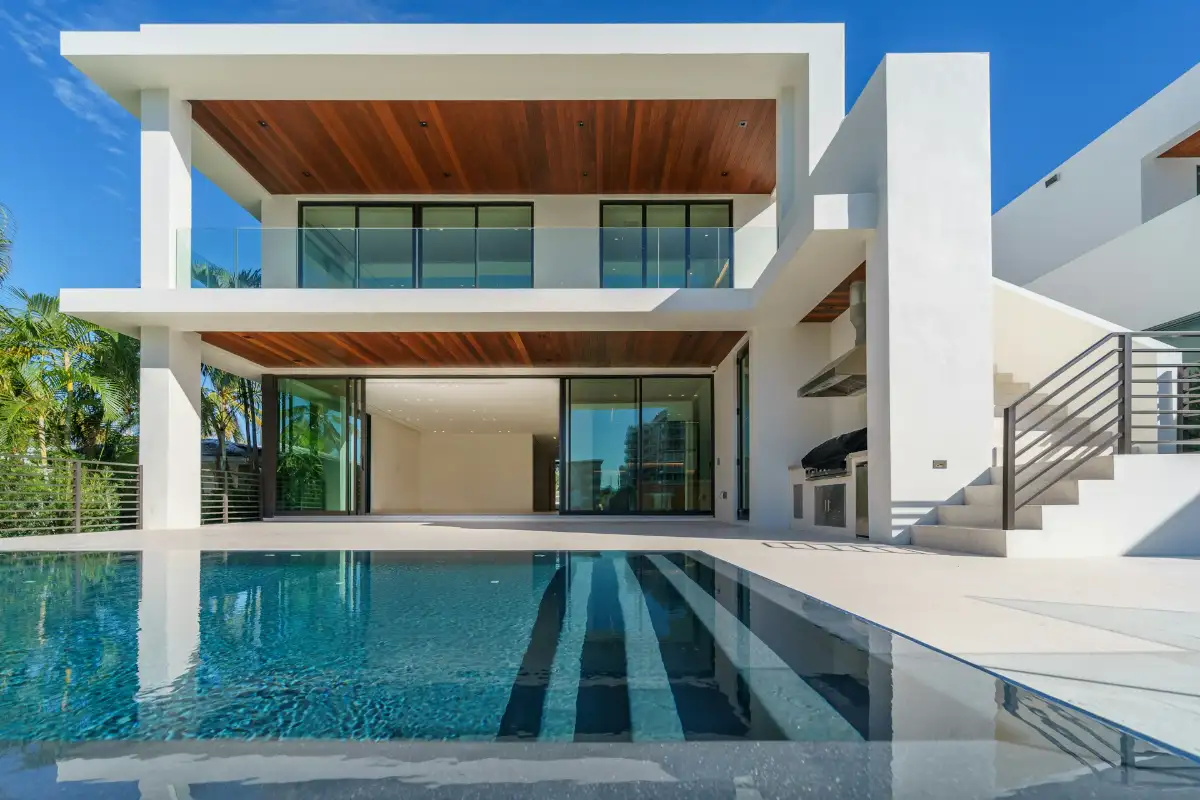
One of the most popular modern design trends is the dissolution of the boundary between indoor living spaces and outdoor entertaining areas. Architects strive for a seamless visual flow, where the flooring material appears to continue uninterrupted through glass slider doors.
Achieving this with concrete coatings requires “Integrated Chemistry.” We need a system that looks identical inside and out but functions differently based on the environment.
- Indoor: Requires a smoother finish for cleanability and comfort.
- Outdoor: Requires UV stability (to prevent yellowing) and a more aggressive anti-slip texture to handle rain and pool water.
We often utilize polyaspartic systems for patios because they are UV stable and can be textured for safety without losing the visual match to the interior epoxy floors. This allows for that coveted “infinity” aesthetic without compromising safety or durability.
Utilizing Successful Collaboration
The most successful projects we work on involve collaboration during the specification phase, not just the bid phase. When architects consult with coating professionals early, we can identify potential issues with deteriorated concrete or incompatible curing compounds before a drop of resin is mixed.
To make sure your design vision survives the construction process, we recommend a “Spec-Ready” approach:
- Define the Load: Be realistic about traffic and chemical exposure.
- Test the Slab: Specify mandatory porosity and moisture testing in your bid documents.
- Match the System: Confirm the coating thickness complements the slab design.
Choose Your Concrete Coating Today
Concrete coatings are no longer just a way to protect a floor. They are a critical component of the architectural envelope. By respecting the engineering requirements of the slab and understanding the chemistry of the finish, you can deliver projects that are as durable as they are beautiful.
If you are currently evaluating flooring options for an upcoming project in North Carolina, do not leave the substrate to chance. Contact Permaco Concrete Coatings for a technical consultation. We will help you build the right specifications from the ground up.