

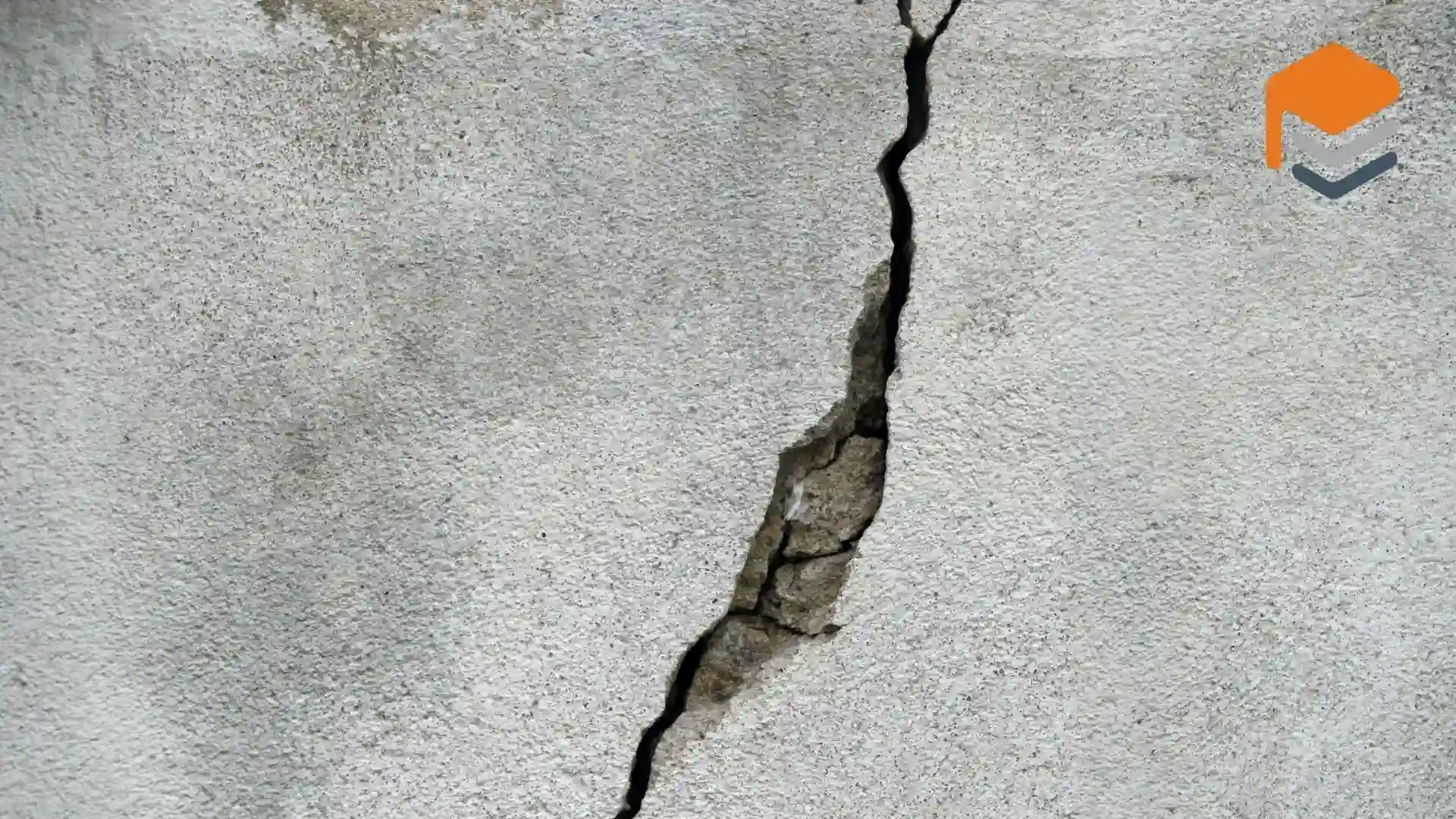
You invested in your property’s exterior expecting durability. Concrete is, after all, synonymous with strength. Yet, you may be noticing a chalky white residue forming on your retaining walls, or perhaps the surface of your driveway is beginning to flake and scale after a harsh North Carolina winter.
This is a symptom of a chemical and physical battle taking place inside your concrete.
For homeowners and facility managers currently evaluating solutions, the market is flooded with “quick-fix” sealers and generic advice. However, protecting your investment requires a diagnostic approach. You need to understand why the damage is occurring to select a concrete coating system for walkways or driveways that will actually last.
At Permaco, we explore the mechanics of efflorescence and freeze-thaw cycles, analyze the chemical composition of protective solutions, and provide a roadmap for long-term mitigation.
Key Takeaways
- Efflorescence and freeze-thaw damage usually share the same root cause, so solving it requires diagnosing permeability and water pathways.
- Polyaspartic/epoxy systems provide the strongest barrier when you need true structural and wear protection.
- Long-term results come from testing, mechanically prepping and repairing the slab, and then installing the right system.
Diagnosing Your Concrete’s Condition
Before you can choose a remedy, you must accurately identify the malady. Environmental damage typically manifests in two distinct ways, often driven by the same culprit: moisture migration.
1. Efflorescence: The “White Powder” Phenomenon
If you see a white, crystalline deposit on your concrete or masonry, you are looking at efflorescence. It occurs when water dissolves water-soluble salts inside the concrete. As the water migrates to the surface and evaporates, it leaves the salt behind.
Recent data indicates that detection models for efflorescence now achieve an accuracy of over 96%, showing just how prevalent and recognizable this issue is in the industry.
It is important to note that Concrete Masonry Units (CMUs) often contain 2–7 times more soluble salts than fired clay units, making them significantly more susceptible. If your foundation or retaining walls are built with CMUs, you are at higher risk.
2. Freeze-Thaw Damage: Spalling and Scaling
In regions like Raleigh and Charlotte, we experience cyclical temperature shifts. When water penetrates concrete pores and freezes, it expands by approximately 9%. This creates internal hydraulic pressure.
Over repeated cycles, this pressure exceeds the tensile strength of the concrete, causing the surface to flake off (scaling) or break into larger chips (spalling).
Understanding Why Deterioration Happens
To choose the right solution, you have to stop thinking of concrete as a solid rock and start thinking of it as a hard sponge.
Concrete is porous. It contains a network of capillaries that allow moisture to travel. When we talk about “environmental deterioration,” we are really talking about permeability.
- The Transport Mechanism: Water enters the pores (rain, sprinklers, snowmelt).
- The Chemical Reaction: That water dissolves calcium hydroxide and other salts within the matrix.
- The Physical Stress: Temperature drops turn that water into ice, shattering the capillary walls.
Standard acrylic sealers often fail because they merely sit on top of the surface without addressing the internal pore structure or allowing the concrete to “breathe” (release trapped vapor). This leads to the sealer bubbling, whitening, and eventually peeling off, leaving you back at square one.
A Guide to Concrete Protection
If you are currently browsing driveway coatings or industrial solutions, you have likely encountered three main chemical categories. Understanding the difference is critical to your decision-making process.
Acrylic Sealers (The “Band-Aid”)
- Mechanism: Forms a thin film on the surface.
- Pros: Inexpensive, easy to apply, enhances color.
- Cons: Low durability. They wear away quickly under UV exposure and traffic. They offer minimal protection against deep freeze-thaw damage.
- Verdict: Suitable for temporary cosmetic fixes, not long-term asset protection.
Silane/Siloxane Penetrating Sealers
- Mechanism: These penetrate the capillaries and chemically react to make the concrete hydrophobic (water-repellent).
- Pros: Excellent for preventing freeze-thaw damage because they keep water out while allowing vapor to escape.
- Cons: They do not provide a protective “wear layer.” The concrete looks natural, but it is still exposed to abrasion, oil stains, and tire marks.
Polyaspartic and Epoxy Systems (The “Shield”)
- Mechanism: These are high-performance, resinous coatings that bond deeply with the concrete cap while creating an impermeable, armored surface layer.
- Pros: extreme abrasion resistance, UV stability (specifically polyaspartic), and total isolation of the concrete slab from moisture and salts.
- Cons: Requires professional preparation (grinding/shot blasting) for proper adhesion.
- Verdict: The gold standard for garages, pool decks, and high-traffic commercial areas where both aesthetics and structural defense are required.
The Ultimate Application Strategy
At Permaco, we believe that the chemical product is only as good as the process used to apply it. Here is the professional workflow for mitigating environmental damage:
Step 1: The “Testing-First” Approach
Never coat without testing. We conduct on-site moisture and hardness tests (using the Mohs scale). If moisture vapor transmission is too high, a standard coating will fail. We must quantify the problem before solving it.
Step 2: Aggressive Surface Preparation
This is where 90% of DIY projects fail. Acid etching is rarely sufficient for high-performance coatings. We utilize diamond grinding to mechanical profile the concrete. This does two things:
- Removes the weak surface layer (laitance) and existing efflorescence.
- Opens the “pores” of the concrete to make sure the coating wicks deep into the slab for a mechanical bond
.
Step 3: Repair and Rebuild
Before coating, we address the damage caused by spalling. We use specific mending agents that are stronger than the concrete itself to fill cracks and divots. This creates a monolithic surface.
Step 4: The Protective System
For outdoor environments subject to UV rays and temperature swings, like a custom patio installation in downtown Cary, we often recommend Polyaspartic systems. Unlike epoxy, which can yellow in the sun, polyaspartic coatings are UV stable and flexible enough to handle thermal expansion and contraction without cracking.
Emerging Trends in Concrete Protection
The industry is moving toward “smart” protection. We are seeing a rise in self-healing concrete technologies and low-carbon materials. However, the most practical advancement for today’s homeowner is the evolution of Polyurea/Polyaspartic chemistry.
Initially developed for industrial bridge coatings, this technology allows for a one-day installation that cures to full strength in 24 hours, offering durability that lasts decades rather than years. It effectively “future-proofs” your concrete against the increasingly erratic weather patterns we see in North Carolina.
Your Roadmap to Long-Lasting Concrete
Concrete damage is progressive. The spalling you see today is a fraction of the stress accumulating inside the slab. By understanding the science of efflorescence and freeze-thaw dynamics, you can make a decision that moves beyond a cosmetic cover-up to a structural protection.
You don’t have to handle these technical specifications alone. At Permaco, we engineer solutions based on the specific porosity and condition of your concrete.
Stop the deterioration before it requires a total replacement. Schedule your on-site consultation and concrete analysis today.